
SWAMI SRI YUKTESWAR GIRI
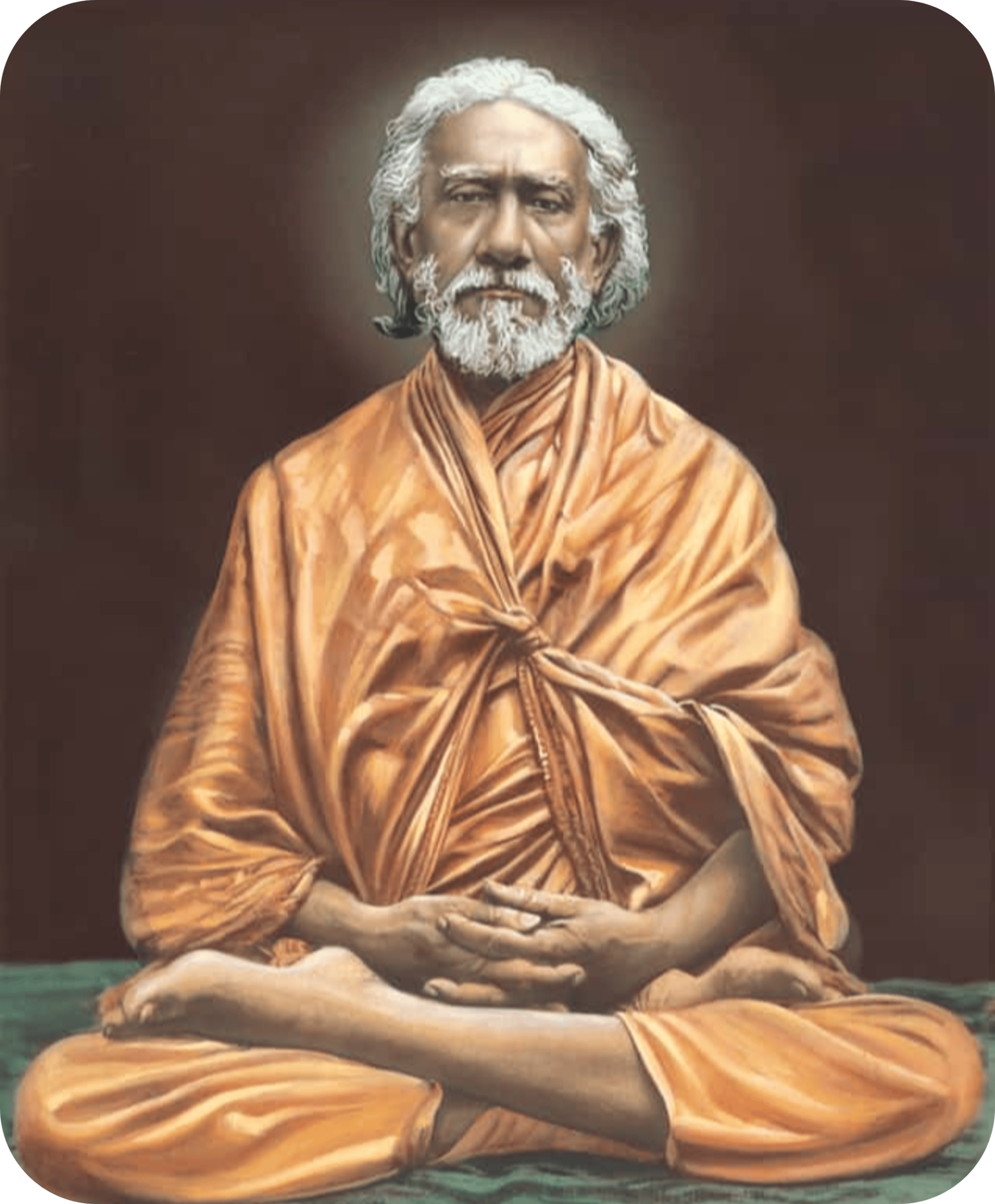
Sri Yukteswar was born on May 10, 1855, in Serampore, Bengal, India. His given name was Priya Nath Karar. After his father’s passing at a young age, Priya Nath took on a substantial portion of the responsibility for managing his family’s landholdings. He attended Srirampur Christian Missionary College and excelled there. Furthermore, for approximately two years, he pursued his education at Calcutta Medical College.
Shortly after earning his college degree, Priya Nath married and had a daughter. A few years after their marriage, his wife passed away. In 1884, Priya Nath encountered Sri Lahiri Mahasaya, who subsequently became his guru and initiated him into the Kriyayoga tradition. Throughout the subsequent years, Sri Yukteswar frequently visited his guru in Benares to remain in his company.
While attending the Kumbha Mela in Allahabad in 1894, Sri Yukteswar encountered Mahavatar Babaji, the guru of Sri Lahiri Mahasaya. Sri Yukteswar was encouraged by Babaji to write a book that would compare Hindu scriptures to the Christian Bible. Sri Yukteswar completed the necessary task, Kaivalya Darshanam, or The Holy Science, in a timely manner. At this point, Sri Yukteswar was given the title “Swami” by Mahavatar Babaji. He was subsequently fully initiated into the monastic Swami order as “Sri Yukteswar Giri.”
Sri Yukteswar transformed his expansive two-story family residence in Serampore into the “Priyadham” ashram, where he resided with his disciples. Close to 1903, he also established the “Karar Ashram” in the seaside town of Puri. He had a limited number of devoted disciples. However, in 1910, Mukunda Lal Ghosh, a young man, became a disciple of Sri Yukteswar. In due course, he attained the status of his most significant disciple, Paramahamsa Yogananda. He completely dedicated his life to the dissemination of Kriyayoga’s teachings worldwide. On March 9, 1936, Sri Yukteswar attained Mahasamadhi, which is the conscious departure of a yogi from the body.